Views: 182 Author: Site Editor Publish Time: 2025-08-19 Origin: Site


Wall mounted agitators have become essential in various industries where efficient mixing and agitation of liquids, suspensions, or slurries are required. From chemical manufacturing to food processing, these machines provide reliable, space-saving solutions that combine powerful agitation with ease of installation. However, despite their apparent simplicity, improper use or installation of a wall mounted agitator can lead to suboptimal performance, increased maintenance, or even safety hazards.
This comprehensive guide explores the five most common mistakes to avoid when working with wall mounted agitators to help engineers, operators, and plant managers optimize their mixing processes. Whether you are installing a new agitator or managing an existing system, understanding these pitfalls will enhance operational efficiency and prolong equipment lifespan.
Before delving into common mistakes, it’s important to grasp what a wall mounted agitator is and how it functions. Unlike traditional floor-mounted agitators, wall mounted agitators are fixed directly onto the sidewall of tanks or vessels. This configuration saves valuable floor space, improves accessibility, and can simplify maintenance procedures.
Typically, a wall mounted agitator consists of a motor, gearbox, shaft, and impeller assembly, all secured on a robust mounting plate attached to the tank wall. The motor drives the impeller, which agitates the fluid inside the tank to achieve homogenization, prevent settling of solids, or promote chemical reactions.
The design allows for heavy-duty applications, capable of handling viscous fluids and aggressive mixing environments. However, the very advantages of space-saving and accessibility can be undermined if common installation or operational errors occur.
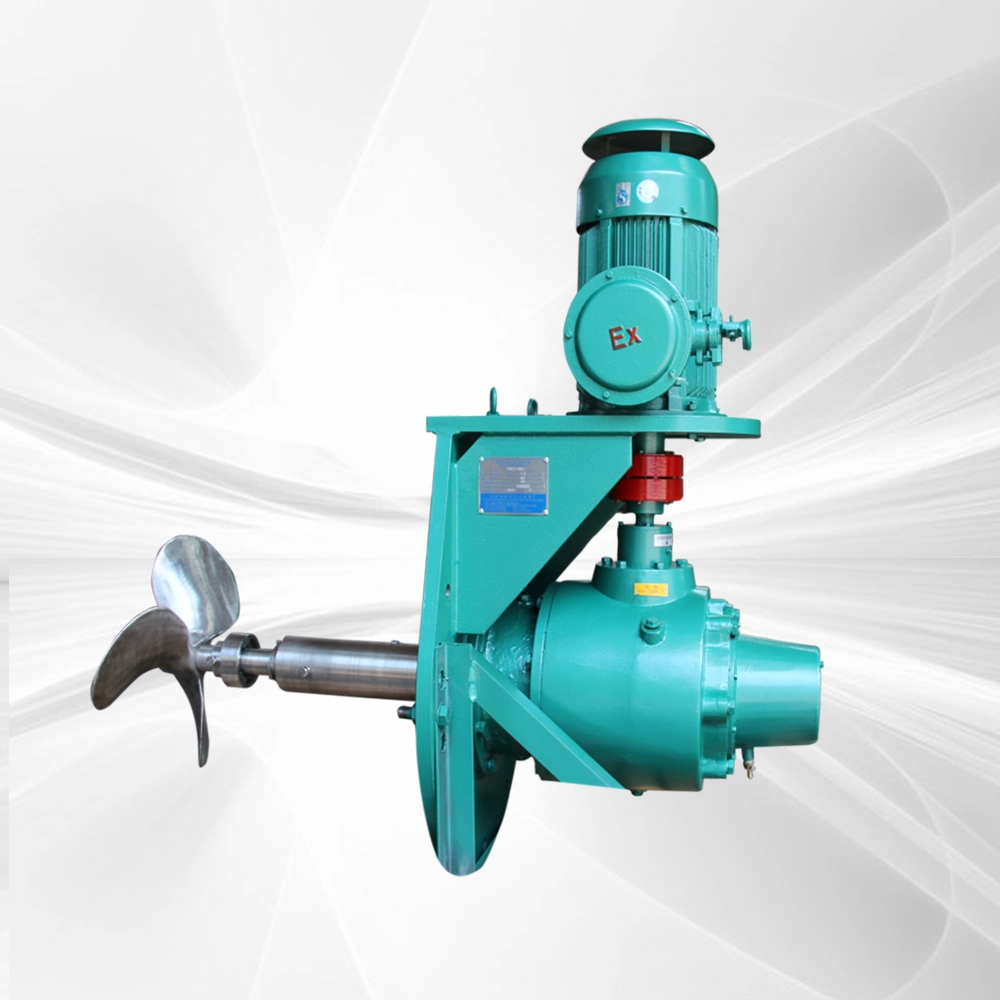
One of the most critical errors made with wall mounted agitators is neglecting proper mounting and support. Since the agitator is fixed to the tank wall, the integrity and strength of this mounting directly impact the agitator’s performance and safety.
A frequent oversight is installing the agitator on a weak or thin tank wall without reinforcement. The agitator’s motor and impeller generate significant torque and vibration. If the tank wall cannot bear this mechanical stress, it may lead to deformation, accelerated wear of the agitator shaft bearings, or even catastrophic failure of the mounting.
How to avoid this mistake?
Conduct a thorough structural analysis of the tank wall to ensure it meets load-bearing requirements.
Use reinforced mounting plates and support brackets designed to distribute stresses evenly.
Consider vibration isolation pads or dampers to reduce transmitted vibrations.
Always follow manufacturer guidelines for mounting plate thickness and welding procedures.
Failing to ensure proper mounting compromises the agitator’s lifespan and may cause unscheduled downtime due to repair work.
Choosing the right impeller type and its correct placement is essential to achieve the desired mixing effect. Unfortunately, a common mistake is to use a generic impeller without regard to fluid characteristics or tank geometry.
Wall mounted agitators often utilize various impeller designs such as pitched blade turbines, propellers, or hydrofoil impellers. Each type is optimized for specific mixing tasks—whether blending, dispersing, or solid suspension.
Key considerations include:
Impeller Diameter: Too small an impeller won’t generate adequate flow; too large can cause excessive power consumption and stress.
Impeller Positioning: The impeller must be placed at the optimal depth and distance from the tank wall to prevent dead zones where mixing is inefficient.
Fluid Viscosity and Density: Heavier fluids require different impeller characteristics than light liquids.
Incorrect impeller choice leads to poor mixing efficiency, increased energy use, and can cause damage due to cavitation or excessive shear forces.
Wall mounted agitators depend on precise shaft alignment to maintain smooth operation. Shaft misalignment is a subtle yet common mistake that can severely shorten the life of the agitator and its components.
Misalignment leads to uneven bearing wear, increased vibration, and can cause seal failure. Seal damage is particularly critical because it allows leakage of fluids, which may be hazardous chemicals, leading to safety and environmental risks.
Preventive measures include:
Use laser or dial indicator alignment tools during installation.
Check alignment regularly as part of maintenance schedules.
Select high-quality mechanical seals designed for the specific fluid and operating conditions.
Avoid excessive shaft runout or bending by ensuring the shaft is straight and properly supported.
Ignoring shaft alignment and seal integrity can result in costly repairs and unplanned operational stoppages.
The power supply and motor sizing for a wall mounted agitator must match the load requirements precisely. Underpowered motors will struggle to maintain the required mixing speed, leading to inefficient processes. Conversely, oversized motors consume unnecessary energy and increase costs.
Inadequate power supply, such as unstable voltage or incorrect frequency, also causes operational issues including overheating, tripping of protection devices, or damage to motor windings.
How to address power and motor sizing?
Perform detailed calculations considering fluid properties, tank dimensions, and mixing objectives.
Select a motor with adequate torque and speed range to handle peak loads.
Ensure electrical supply is stable and conforms to motor specifications.
Implement variable frequency drives (VFDs) where precise speed control is needed.
Proper motor sizing enhances energy efficiency, ensures consistent mixing, and reduces wear on mechanical components.
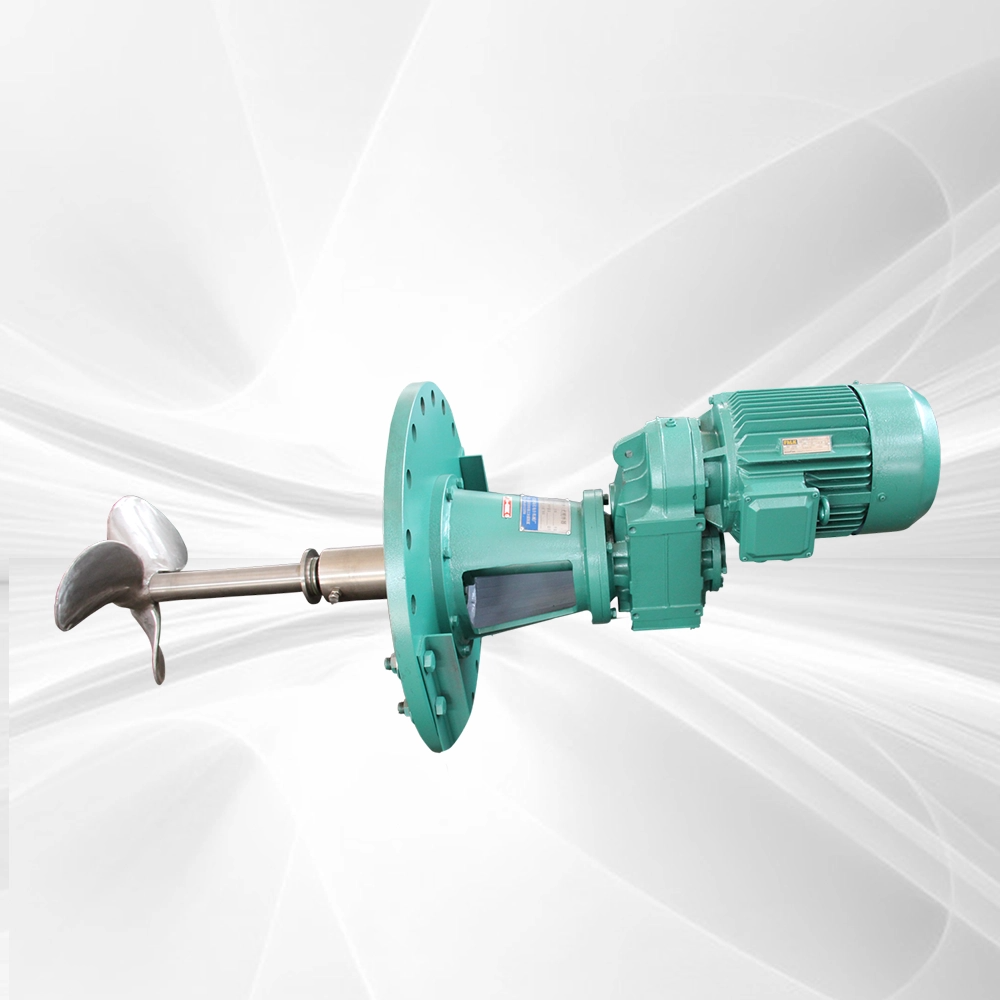
Maintenance is often overlooked or deprioritized in industrial environments, but with wall mounted agitators, it is critical to sustain reliable operation.
Typical maintenance tasks include:
Lubricating bearings and gearboxes according to schedule.
Inspecting impellers and shafts for wear, corrosion, or damage.
Checking mounting bolts and plates for looseness or fatigue cracks.
Testing seals and replacing worn components before leakage occurs.
Neglecting maintenance leads to gradual deterioration, unexpected failures, and potential safety hazards, especially in hazardous or corrosive environments.
Implementing a detailed maintenance plan with clear inspection intervals and logging is best practice to maximize uptime and equipment life.
| Common Mistake | Description | Recommended Solution |
|---|---|---|
| Improper Mounting | Weak tank wall or poor mounting structure | Structural analysis, reinforced plates, vibration isolation |
| Incorrect Impeller Selection | Wrong impeller type or positioning | Match impeller to fluid and tank geometry |
| Shaft Misalignment & Seal Failure | Misaligned shaft causing vibration & leakage | Precision alignment, quality seals, regular checks |
| Inadequate Motor Sizing | Motor too weak or too strong, unstable power | Accurate load calculation, VFD use, stable supply |
| Neglected Maintenance | Lack of lubrication and inspections | Scheduled maintenance, detailed logs |
Wall mounted agitators are widely used in chemical processing, pharmaceuticals, food and beverage, wastewater treatment, paint manufacturing, and cosmetics production. Their space-saving design makes them ideal for plants where floor area is limited but efficient mixing is critical.
Yes, many heavy-duty wall mounted agitators are designed for high-viscosity and shear-sensitive fluids. However, the impeller type, motor power, and mounting strength must be carefully chosen to handle such demanding applications.
Signs include increased vibration, unusual noises, leakage around seals, overheating motor, and inconsistent mixing results. Routine inspections are recommended even if no symptoms are apparent to avoid unexpected failures.
Absolutely. Many tanks can be retrofitted with wall mounted agitators by welding mounting plates and reinforcing the tank wall. It’s essential to evaluate the tank structure and mixing requirements beforehand.
Ensure the agitator is properly grounded electrically, verify structural integrity, use correct lifting equipment for installation, and follow lockout/tagout procedures to prevent accidental startup during maintenance.
Avoiding these common mistakes will ensure that your wall mounted agitator performs efficiently, safely, and with minimal downtime. Proper mounting, careful impeller selection, precision shaft alignment, adequate motor sizing, and diligent maintenance are pillars of best practice in managing these critical mixing devices.
By understanding the nuances of wall mounted agitators, users can harness their full potential—achieving superior mixing quality, reducing operational costs, and extending equipment lifespan.
Investing time in correct installation and regular upkeep not only safeguards your production processes but also contributes significantly to workplace safety and environmental compliance. Remember, the right approach to wall mounted agitators is not just about having the equipment but mastering its application.