
- All
- Product Name
- Product Keyword
- Product Model
- Product Summary
- Product Description
- Multi Field Search
Please Choose Your Language
Views: 0 Author: Site Editor Publish Time: 2026-01-28 Origin: Site
High-viscosity fluids are substances that resist flow due to their thick consistency. These fluids are typically characterized by a high internal friction, which slows their movement. Examples of high-viscosity fluids include pastes, gels, heavy oils, and molasses, all of which require specialized equipment for efficient mixing. High-viscosity fluids are common in industries such as pharmaceuticals, food processing, and chemical manufacturing.
The viscosity of a fluid is measured in centipoise (cP) or Pascal-seconds (Pa.s), and it directly influences the type of mixing equipment needed. The higher the viscosity, the harder it is to achieve uniform mixing and dispersion.
Non-Newtonian fluids do not follow the traditional laws of fluid dynamics as described by Sir Isaac Newton. Unlike Newtonian fluids, whose viscosity remains constant regardless of the applied shear stress, non-Newtonian fluids exhibit varying viscosities depending on the shear rate. This behavior can include shear-thinning, shear-thickening, and viscoelasticity.
Shear-thinning fluids (also known as pseudoplastic fluids) decrease in viscosity as shear rate increases. Common examples include ketchup and paint.
Shear-thickening fluids (also known as dilatant fluids) increase in viscosity as shear rate increases. An example is cornstarch in water, which behaves like a solid under rapid stress.
Viscoelastic fluids exhibit both liquid and solid characteristics, showing elasticity under stress. Many biological fluids, such as blood, belong to this category.
Mixing high-viscosity and non-Newtonian fluids presents several challenges:
Increased Energy Requirements: High-viscosity fluids require greater energy to achieve the desired flow. This can result in increased operational costs and energy consumption.
Non-Uniform Mixing: Non-Newtonian fluids tend to exhibit varying flow behaviors at different shear rates, which can result in inconsistent mixing if not carefully controlled.
Flow Instabilities: Due to their complex rheology, non-Newtonian fluids may form lumps, clumps, or dead zones in mixing vessels, leading to poor dispersion and inconsistent product quality.
These challenges necessitate specialized mixing techniques and equipment to achieve efficient and consistent results.
Rheology is the study of how materials flow under different conditions, and it is a critical factor in mixing high-viscosity and non-Newtonian fluids. Understanding the rheological properties of a fluid, such as yield stress, viscosity, and elasticity, helps in selecting the appropriate mixing technology.
Yield Stress: This is the minimum stress required to initiate flow in a fluid. Fluids with high yield stress, such as pastes and gels, often need high-shear mixing equipment to overcome this initial resistance.
Viscosity: The internal resistance to flow in a fluid. As viscosity increases, the energy required for mixing also increases, which may necessitate the use of more powerful equipment.
Elasticity: Non-Newtonian fluids with significant elasticity can behave like solids under certain conditions and like liquids under others. This can affect the efficiency of traditional mixing methods.
The shear rate refers to the rate at which adjacent layers of fluid move relative to each other. For non-Newtonian fluids, shear rate plays a vital role in determining viscosity:
High Shear Rates: Shear-thinning fluids decrease in viscosity with increased shear rate, which makes them easier to mix at higher speeds. However, if the shear rate is too high for shear-thickening fluids, it can lead to undesirable effects such as solidification or agglomeration.
Low Shear Rates: Some non-Newtonian fluids, such as those with high elasticity, may require lower shear rates to avoid breaking down or losing their desired properties.
Understanding the optimal shear rate for a given fluid ensures that mixing can be achieved efficiently without degrading the product.
Temperature has a profound effect on the viscosity and rheology of non-Newtonian fluids. In many cases, raising the temperature can lower the viscosity of high-viscosity fluids, making them easier to mix. Conversely, cooling a fluid may increase its viscosity, which can hinder mixing.
Heating: Increasing temperature can decrease viscosity, making high-viscosity fluids easier to process. However, too much heat may degrade sensitive components in certain formulations, such as pharmaceuticals or food products.
Cooling: Cooling can help maintain the viscosity of certain products, particularly in industries like petrochemical processing or cosmetic formulations, where viscosity control is critical.
Maintaining precise temperature control is essential for ensuring consistent fluid properties and efficient mixing.
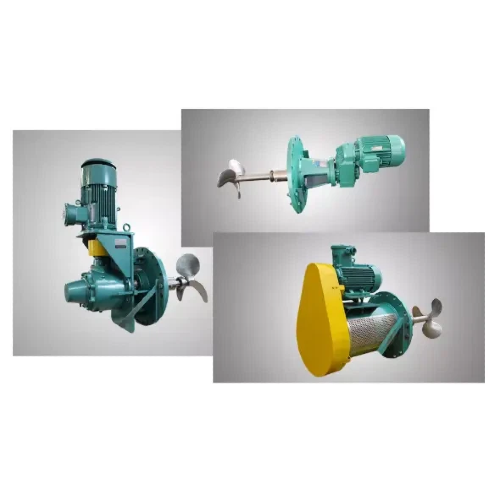
The design of the impeller is crucial for mixing high-viscosity and non-Newtonian fluids effectively. The impeller type determines how the fluid is sheared and moved inside the vessel. Several impeller configurations are commonly used in these applications:
Impeller Type | Best Used For | Advantages |
Paddle Mixer | High-viscosity fluids, heavy slurries | Gentle mixing, ideal for thick pastes |
Anchor Mixer | Highly viscous, shear-sensitive fluids | Low shear, ideal for shear-thickening fluids |
Helical Ribbon | High-viscosity and non-Newtonian fluids | Provides both axial and radial flow, prevents dead zones |
Turbine Mixer | Low to medium viscosity fluids | High shear, effective for dispersing solids |
Optimizing shear intensity and ensuring adequate flow induction are key to preventing issues like agglomeration or poor dispersion. High-viscosity fluids require special techniques to ensure that the flow is evenly distributed and that shear forces are applied uniformly.
Controlled Shear Rate: Adjusting the shear rate based on fluid type and desired outcome helps in achieving uniform consistency.
Flow Induction: Proper flow induction ensures that no fluid zones remain stagnant, which is a common problem when mixing non-Newtonian fluids.
The choice of mixing equipment depends on several factors including fluid viscosity, the volume of fluid, and the desired speed of mixing. Common types of equipment include:
Batch Mixers: These are typically used when large volumes need to be mixed in discrete cycles.
Continuous Mixers: Continuous mixing is ideal for steady processing of fluids in industries like chemicals or food.
Vacuum Mixers: For applications where aeration or degassing is necessary, vacuum mixing systems can efficiently mix fluids while maintaining a controlled environment.
Reducing energy consumption without compromising mixing efficiency is a significant consideration in large-scale operations. Techniques like adjusting impeller speed, optimizing fluid flow, and selecting energy-efficient mixers can help achieve this goal.
High-shear mixers are designed to provide intense mechanical forces that break down clumps or agglomerates within high-viscosity and non-Newtonian fluids. These mixers are ideal for applications where fine dispersion of solids in liquids is required.
Homogenization: High-shear mixing achieves better particle size reduction, improving the quality and consistency of the final product.
Applications: Commonly used in emulsions, creams, and fine dispersions such as in the pharmaceutical and cosmetic industries.
Co-rotation and counter-rotation mixers use two or more intermeshing screws or blades that rotate in the same or opposite directions. These systems are ideal for handling high-viscosity and non-Newtonian fluids in continuous processes.
Co-Rotation: Ensures smooth mixing by moving materials in the same direction.
Counter-Rotation: Creates intense shear and mixing forces by moving materials in opposite directions, which is particularly useful for shear-sensitive fluids.
Twin-screw extruders provide an excellent solution for continuous mixing of non-Newtonian fluids. The two screws interlock and rotate together, providing both shear and compression, ideal for non-Newtonian fluid systems.
Precision Control: Twin-screw extruders allow precise control over shear, temperature, and flow rates, making them ideal for processes like polymer mixing or food production.
In the pharmaceutical industry, mixing high-viscosity and non-Newtonian fluids is essential for creating stable formulations such as gels, creams, and ointments. The precise mixing of these fluids ensures that active ingredients are evenly distributed.
Food products such as sauces, syrups, jams, and dressings are often high-viscosity and non-Newtonian in nature. Effective mixing ensures product consistency and texture, key factors in consumer satisfaction.
In chemical manufacturing, high-viscosity and non-Newtonian fluids are often encountered in paints, coatings, adhesives, and lubricants. Mixing ensures that the end products maintain the required properties such as consistency, color, and texture.
Mixing high-viscosity fluids is essential in creating cosmetic products such as lotions, creams, and hair gels. These products need to have a consistent texture and stability, which is achieved through careful mixing.
Common issues encountered when mixing high-viscosity and non-Newtonian fluids include poor dispersion, excessive energy consumption, and inconsistent mixing. These problems can often be solved by:
Adjusting impeller speed and configuration
Ensuring correct shear rates are applied
Selecting appropriate equipment based on viscosity
Real-time monitoring of the mixing process is essential for optimizing performance. Using advanced sensors and automation helps ensure consistency and quality throughout the mixing process.
Innovations in mixing technology, such as smart mixers that leverage real-time data for process adjustments, are shaping the future of fluid mixing. These advancements promise significant improvements in efficiency and precision, helping industries achieve optimal mixing results. At JiangSu KeHeng Petrochemical & Electrical Machinery Co., Ltd, we understand that each fluid has unique properties, and that's why we emphasize the importance of customized mixing strategies. By thoroughly understanding the rheology and behavior of fluids, we ensure that the right equipment and techniques are applied, resulting in superior product quality and process efficiency.
Our team is dedicated to providing tailored solutions that meet the specific needs of your mixing applications. If you're looking for reliable, high-performance mixing equipment or need expert advice on optimizing your mixing processes, we invite you to reach out to us. Let us help you achieve the best results for your operations, whether you're dealing with high-viscosity fluids, non-Newtonian fluids, or any other complex fluid types.
What is the difference between high-viscosity and non-Newtonian fluids?
High-viscosity fluids have a thick consistency and resist flow, while non-Newtonian fluids exhibit varying viscosities depending on the shear rate.
Why is controlling temperature important when mixing non-Newtonian fluids?
Temperature significantly affects viscosity and rheology. Controlling temperature ensures consistent fluid properties and helps achieve optimal mixing performance.
What types of mixers are best for high-viscosity and non-Newtonian fluids?
High-shear mixers, paddle mixers, and twin-screw extruders are ideal for handling high-viscosity and non-Newtonian fluids, each providing different shear rates and flow induction.
How can energy efficiency be improved in mixing high-viscosity fluids?
Energy efficiency can be improved by selecting appropriate mixers, adjusting shear rates, and optimizing equipment for specific fluid properties.