- All
- Product Name
- Product Keyword
- Product Model
- Product Summary
- Product Description
- Multi Field Search
Please Choose Your Language
Views: 0 Author: Site Editor Publish Time: 2026-11-28 Origin: Site
Installing an untested, high-value industrial agitator introduces unacceptable financial and operational risks. You risk jeopardizing entire production batches if the equipment fails under real-world conditions. Discovering mechanical flaws, seal leaks, or control integration failures after installation leads to extended downtime. Field repairs are complex, expensive, and often void manufacturer warranties.
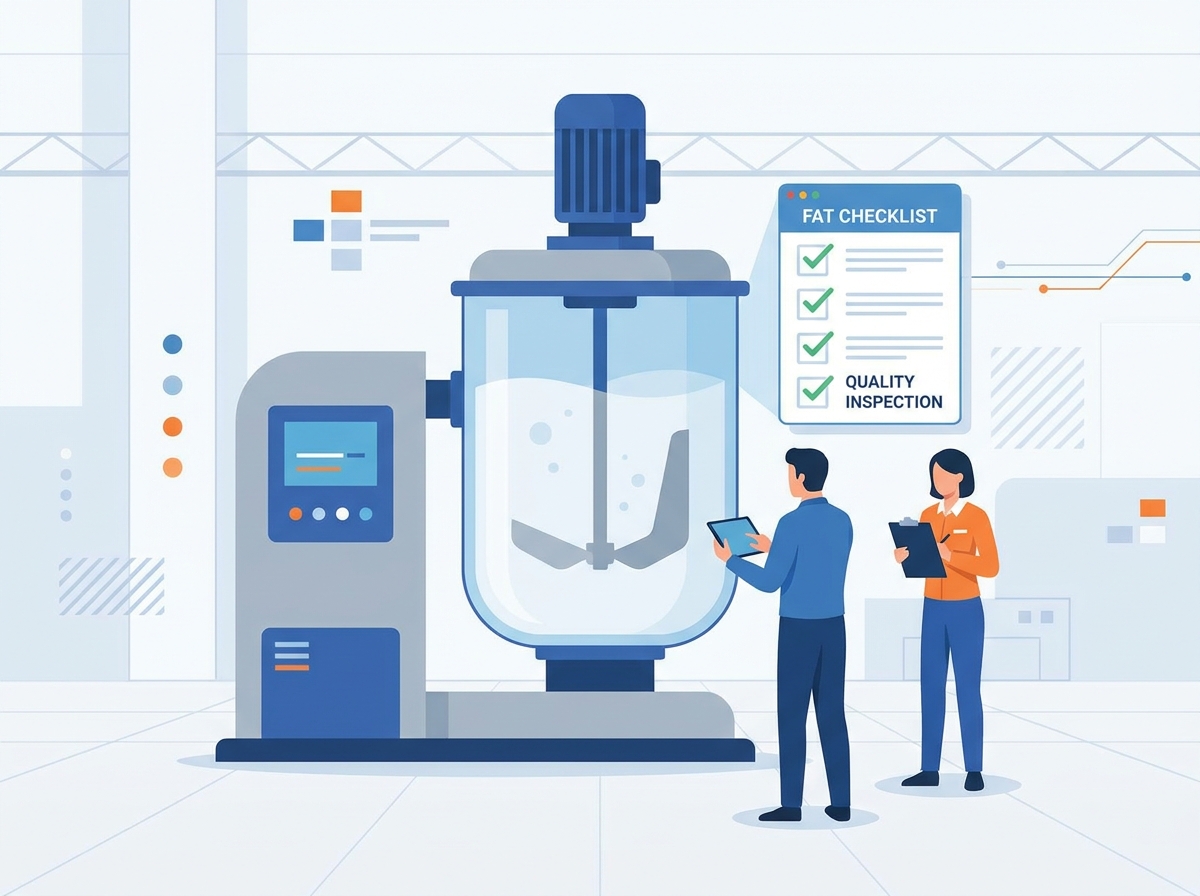
A rigorous, highly structured industrial agitator factory acceptance test bridges the gap between engineering design and operational reality. This testing phase ensures the equipment performs exactly to specification before it ever leaves the manufacturer's floor. It validates mechanical integrity, electrical integration, and fluid dynamics in a controlled environment. You eliminate assumptions and secure hard data proving the mixer will handle your specific process demands.
Standardized equipment checklists are insufficient; a custom agitator acceptance test must be engineered to reflect your specific process conditions and mechanical tolerances.
Mechanical run tests, shaft runout measurements, and vibration analysis are non-negotiable for proving long-term reliability.
Comprehensive documentation gathered during the FAT is critical for regulatory compliance, seamless Site Acceptance Testing (SAT), and future maintenance baselines.
Identifying and remediating defects at the OEM’s facility saves exponentially on field modification costs and project delays.
Generic equipment testing protocols rarely account for the dynamic forces generated during complex mixing operations. A standard check-the-box factory test might verify that the motor turns on and the shaft rotates. This basic verification completely ignores the complex fluid dynamics, radial loads, and torque requirements of an industrial mixing application. Relying on these generic checklists leaves you vulnerable to unexpected mechanical failures once the agitator faces actual process fluids.
A definitive pass for an agitator requires strict adherence to predefined success criteria. You must measure torque delivery under simulated loads to ensure the gearbox and motor can handle peak viscosity spikes. Vibration thresholds must be continuously monitored across the entire operating speed range. Mechanical seal integrity requires validation under pressure to prevent hazardous leaks. A comprehensive industrial mixer inspection before shipment confirms these specific parameters, ensuring the unit meets exact engineering specifications.
Assuming theoretical engineering models will perfectly translate to physical performance is a dangerous operational risk. Computational Fluid Dynamics (CFD) and structural modeling provide excellent design foundations. However, physical manufacturing introduces variables like machining tolerances, material inconsistencies, and assembly variations. Without empirical testing, you risk discovering that a theoretically perfect shaft deflects excessively under load. Physical testing exposes these hidden variables, allowing manufacturers to correct structural weaknesses before the equipment reaches your facility.
Measuring shaft runout is a primary defense against shaft deflection during operation. Technicians use dial indicators along multiple points of the agitator shaft to measure deviation from a perfectly straight axis. Excessive runout causes severe vibration, premature bearing failure, and rapid mechanical seal degradation. Critical speed analysis is equally important. The testing process must confirm that the agitator's operating speeds do not intersect with its natural resonant frequencies. Running an agitator at its critical speed amplifies vibrations, potentially snapping the shaft or tearing the mounting flange from the vessel.
Impeller static and dynamic balancing prevents uneven load distribution across the drive assembly. Unbalanced impellers generate destructive radial forces that wear down gearboxes and motor bearings. Manufacturers must balance these components using precision equipment before final assembly. Additionally, dimensional checks against approved General Arrangement (GA) drawings ensure the equipment will actually fit your vessel.
During dimensional checks, inspectors must verify several specific measurements against the approved drawings:
Overall shaft length from the mounting flange to the lowest impeller.
Impeller blade diameter and pitch angle to ensure proper fluid flow patterns.
Mounting flange dimensions, including bolt hole circle and gasket seating surfaces.
Nozzle orientations for flush ports and barrier fluid connections.
Motor load testing and Variable Frequency Drive (VFD) parameter verification ensure the agitator scales across different batch viscosities. Technicians run the motor through its entire speed range, monitoring amp draw and voltage stability. VFDs are programmed and tested to confirm they deliver the correct torque at low speeds and prevent motor stalling during high-viscosity phases. This testing guarantees the drive system can handle the specific rheological changes of your process fluid without tripping breakers or overheating.
Sensor calibration protocols protect the mechanical integrity of the mixing system. Technicians must verify the accuracy of bearing temperature RTDs, ensuring they trigger alarms before overheating occurs. RPM monitors are calibrated to confirm the physical shaft speed matches the control panel display. Vibration sensors require strict testing to ensure they accurately detect abnormal harmonics. These sensors act as the first line of defense against mechanical failure, making their precise calibration non-negotiable.
Automation verification tests the direct integration of the agitator into your facility's control architecture. Inspectors validate PLC communications, ensuring data flows correctly between the agitator's local panel and the main plant control system. HMI responsiveness is tested for lag and accuracy. Safety interlocks undergo rigorous simulation. Technicians trigger emergency stops, simulate high-vibration scenarios, and mimic seal pressure losses to confirm the system automatically shuts down safely. This validation prevents dangerous equipment operation during unforeseen process upsets.
Mechanical seal pressure tests and barrier fluid leak detection protocols are mandatory for hazardous or sanitary environments. Double mechanical seals require a pressurized barrier fluid to prevent process gases or liquids from escaping into the atmosphere. During the test, the seal cavity is pressurized to its maximum design limit. Inspectors monitor the system for pressure drops over a sustained period. Any loss of pressure indicates a compromised seal face or faulty O-ring. This testing guarantees containment integrity, protecting plant personnel and the environment from toxic or flammable process materials.
For double mechanical seals, the barrier fluid system requires meticulous inspection. Technicians must verify the operation of the seal pot, checking the pressure gauges, level switches, and cooling coils. The barrier fluid pressure is typically set 15 to 30 psi higher than the maximum vessel pressure. During the FAT, inspectors monitor the seal pot for any drop in fluid level or pressure. A dropping level indicates the inboard seal face is leaking barrier fluid into the process vessel. A pressure drop without a level change suggests a leak in the outboard seal or the external piping. Identifying these leaks on the test stand allows technicians to replace faulty O-rings or lap the seal faces without causing downtime at your facility.
Bearing temperature monitoring during extended run tests identifies premature wear and inadequate lubrication. The agitator is run continuously for several hours while technicians track the thermal stabilization of the gearbox and motor bearings. Temperatures should plateau within acceptable limits defined by the bearing manufacturer. Continuous temperature spikes indicate misalignment, improper clearances, or insufficient oil flow. Catching these thermal anomalies during the factory test prevents bearing seizures during your first production run.
Operational noise levels must comply with OSHA regulations or specific site safety requirements. Technicians use calibrated decibel meters to measure sound emissions at various distances from the drive assembly. Gearbox whine, motor fan noise, and structural resonance all contribute to the overall acoustic profile. If the agitator exceeds acceptable decibel limits, the manufacturer must implement sound-dampening enclosures or modify the gear meshing before shipment. Protecting operators from long-term hearing damage is a strict compliance requirement.
Protective coatings and paint thickness are verified using Dry Film Thickness (DFT) gauges. Industrial agitators often operate in highly corrosive chemical environments or undergo intensive caustic washdown procedures. The paint system must provide an impenetrable barrier against these harsh conditions. Inspectors measure the DFT at multiple locations on the motor, gearbox, and pedestal to ensure the coating meets the specified micron thickness. They also perform adhesion tests to confirm the paint will not flake or peel, which could contaminate the process fluid or expose the carbon steel to rapid oxidation.
Establishing baseline requirements before the physical test begins streamlines the entire inspection process. You must review all Material Test Reports (MTRs) to confirm the chemical composition and physical properties of the wetted parts match your specifications. Weld inspection logs, including dye penetrant and radiography reports, validate the structural integrity of the shaft and impeller fabrications. Reviewing this documentation ensures the manufacturer used the correct alloys and welding procedures before the equipment is even assembled.
Surface finish certifications require strict scrutiny, especially for sanitary applications. Inspectors use profilometers to measure Ra (Roughness Average) values on all wetted surfaces. These measurements must comply with industry-specific sanitary standards like cGMP, FDA, or ASME BPE. A surface finish that is too rough harbors bacteria and prevents effective Clean-In-Place (CIP) operations. A comprehensive agitator FAT checklist mandates these documentation reviews to prevent compliance failures during final facility validation.
Simulating process fluids through wet testing provides the most accurate performance data but introduces significant logistical complexity. Wet testing requires building a test tank, sourcing a fluid that mimics your product's viscosity, and managing the disposal of that fluid afterward. Dry testing runs the agitator in open air. While dry testing is simpler and faster, it cannot validate motor sizing under load or measure actual impeller pumping capacity. You must weigh the high costs of wet testing against the operational risks of relying solely on dry run data.
Wet testing provides invaluable data for scaling up production. When you run the agitator in a test tank filled with a fluid matching your target viscosity, you can measure the actual power draw of the motor. This confirms whether the motor is properly sized or if it risks overloading during peak viscosity phases. You also observe the fluid flow patterns, checking for dead zones or excessive vortexing. If the impeller design fails to achieve the required turnover rate in the test tank, the manufacturer can modify the blade pitch or diameter before shipping the unit.
Specific scenarios demand wet testing to validate engineering assumptions. If you are mixing highly viscous, non-Newtonian fluids, a dry run will not expose potential motor stalling or shaft deflection issues. A custom agitator acceptance test for these complex applications absolutely requires viscosity simulations. Wet testing validates the impeller's efficiency, confirms the motor has sufficient torque reserves, and ensures the mechanical seals function correctly under fluid pressure. For critical processes, the investment in wet testing is a necessary insurance policy against field failure.
Immediate preservation steps are required following a successful factory inspection. The agitator shaft must be rigidly secured using custom blocking to prevent bending or bearing damage during transit. Vibration from trucks or cargo ships can destroy precision bearings if the shaft is allowed to move freely. Technicians must drain all test fluids, thoroughly dry the wetted components, and apply rust inhibitors to unpainted machined surfaces. These steps protect the equipment from environmental degradation during shipping and site storage.
Mechanical seals require specific preservation protocols to maintain their integrity. The seal cavities are often purged with nitrogen to displace moisture and prevent internal corrosion. Desiccant bags are placed inside control panels and motor terminal boxes to absorb condensation. All nozzles and flange openings must be sealed with heavy-duty covers. Proper shipping preparation ensures the agitator arrives at your facility in the exact condition it was in when it passed the factory test.
Factory testing protocols must align with stringent engineering standards to guarantee structural and operational safety. Petroleum and chemical applications often require adherence to API 673 standards for continuous duty agitators. Pressure vessels and associated mounting flanges must comply with ASME Section VIII requirements. Aligning your test procedures with these established codes ensures the equipment meets global safety and reliability benchmarks. It also simplifies the process of securing insurance and regulatory approvals for your facility.
Deciding who witnesses the test impacts both cost and quality assurance. You can send internal process engineers, or you can hire specialized third-party inspectors. Each approach offers distinct advantages depending on your internal resources and the complexity of the equipment.
Inspection Approach | Primary Advantages | Potential Drawbacks | Best Use Case |
|---|---|---|---|
Internal Process Engineers | Deep understanding of the specific process requirements and facility integration needs. | May lack specialized knowledge in mechanical vibration analysis or seal diagnostics. Travel costs. | Highly custom processes where fluid dynamics and batch scaling are the primary concerns. |
Third-Party Inspectors | Unbiased evaluation. High expertise in mechanical codes, welding standards, and instrumentation. | Additional hourly consulting fees. May not fully grasp the nuanced process goals of the end-user. | Standardized equipment, overseas manufacturing, or strict regulatory compliance requirements. |
A robust factory test drastically reduces the time and resources required for the Site Acceptance Test (SAT). When you resolve mechanical alignments, sensor calibrations, and VFD programming at the factory, the site team does not have to troubleshoot these basic functions. The SAT focus shifts entirely from equipment validation to system-wide integration. You simply verify that the agitator communicates with your plant's main DCS and that it physically fits the installed vessel.
This continuum accelerates your overall project timeline. Field modifications are notoriously slow and require specialized contractors. A factory environment has all the necessary machining tools, spare parts, and engineering personnel immediately available. By pushing the rigorous testing upstream to the FAT, you ensure the SAT becomes a smooth, predictable commissioning exercise rather than a chaotic troubleshooting session.
When an agitator fails a testing parameter, immediate and structured remediation is required. The first step is generating a formal Non-Conformance Report (NCR). This document details the exact nature of the failure, the specific parameter that was breached, and the conditions under which the failure occurred. Whether it is excessive vibration, a seal leak, or a motor overheating, the NCR establishes a clear record of the defect. This documentation prevents the manufacturer from dismissing the issue as a testing anomaly.
The remediation process should follow a strict sequence to maintain quality control:
Isolate the equipment and halt all further testing procedures.
Document the failure condition with photographs, sensor data logs, and a formal NCR.
Conduct a root cause analysis involving both the OEM engineering team and the buyer's representatives.
Implement the approved mechanical or electrical correction.
Restart the specific test parameter from the beginning to verify the fix.
Establishing corrective action plans dictates how the manufacturer will resolve the defect. The plan must outline the root cause analysis, the proposed mechanical or electrical fix, and the timeline for completion. Contractual protections should define who bears the cost of project delays and subsequent re-testing. The manufacturer is typically responsible for all remediation costs and the expenses associated with repeating the failed portions of the test. You must never accept shipment of an agitator with unresolved NCRs.
The data collected during remediation and final successful testing directly informs the commissioning phase. If a specific harmonic resonance was identified and corrected by adjusting the VFD parameters, that data is transferred to the site integration team. This ensures the field engineers do not accidentally revert to the problematic settings during the SAT. A transparent resolution process transforms a testing failure into valuable operational intelligence for the lifecycle of the equipment.
A rigorous factory testing protocol is a primary risk mitigation tool and a financial safeguard. By validating mechanical integrity, control integration, and performance under load, you prevent equipment failures on your production floor. The investment in comprehensive testing pays immediate dividends by eliminating costly field modifications and accelerating your commissioning timeline.
Evaluate your OEM’s in-house testing capabilities and facility infrastructure before finalizing purchase orders.
Demand customization of testing protocols to reflect your specific fluid viscosities and operational loads.
Establish clear contractual terms regarding remediation costs and retesting procedures for any failed parameters.
Schedule a technical consultation with mixing engineers to draft your specific testing requirements and pass criteria.
A: A Factory Acceptance Test (FAT) verifies the agitator meets mechanical and performance specifications at the manufacturer's facility before shipment. A Site Acceptance Test (SAT) occurs after installation at your facility, focusing on system integration, physical mounting, and communication with the plant's main control systems.
A: Testing duration varies based on equipment complexity. A standard dry run test may take one to two days. Complex wet testing, extended bearing temperature stabilization runs, and rigorous automation validation can extend the process to a full week.
A: Attendance should include the buyer's project engineer, a quality assurance representative, and an automation specialist. For highly critical or complex systems, hiring an independent third-party mechanical inspector ensures unbiased validation of vibration and structural data.
A: Yes, many manufacturers offer virtual testing using high-definition cameras, live data streaming of sensor outputs, and screen-sharing of control panels. While convenient, virtual testing makes it difficult to physically assess paint quality, surface finishes, and subtle acoustic anomalies.
A: You receive a comprehensive turnover package. This includes signed test checklists, vibration analysis reports, material test reports (MTRs), weld inspection logs, calibration certificates for all sensors, and formal closure documents for any Non-Conformance Reports (NCRs).
A: Acceptable limits depend on the agitator's size, speed, and mounting configuration. Generally, limits are defined by standards like API 673 or ISO 10816. The manufacturer must provide the specific acceptable velocity based on the equipment's engineered design.