
- All
- Product Name
- Product Keyword
- Product Model
- Product Summary
- Product Description
- Multi Field Search
Please Choose Your Language
Views: 0 Author: Site Editor Publish Time: 2025-11-28 Origin: Site
In industrial processing, mixing is a vital step in ensuring that raw materials, liquids, pastes, or powders are properly blended to achieve consistent quality and efficiency. One popular solution for mixing bulk materials, especially in applications that require versatility and high-volume production, is the IBC tote tank mixer. These specialized mixers are used in a variety of industries, including chemicals, pharmaceuticals, food production, and cosmetics. But what exactly is an IBC tote tank mixer, and why is it so widely used?
An IBC tote tank mixer is a type of industrial mixer designed specifically for use with IBC (Intermediate Bulk Containers) totes. IBC totes are large, reusable containers used for transporting and storing liquids, chemicals, food ingredients, and other bulk materials. These containers typically come in a standard size of around 275 to 330 gallons and are made from materials like polyethylene or stainless steel.
IBC tote tank mixers are mounted inside or on top of IBC totes to agitate, mix, and homogenize the contents within the container. The mixer can be powered by electric, pneumatic, or hydraulic motors, depending on the application and environment. It is typically designed with a motor, a drive shaft, and one or more mixing impellers that are lowered into the tote to create the necessary flow and agitation for mixing.
These mixers are built to fit securely in standard IBC totes and come in various configurations to meet specific mixing requirements. The most common design includes a side-entry mixer, where the mixing impeller is placed directly inside the tote and powered through a shaft. Top-entry designs, on the other hand, involve a motor and drive system placed on top of the tote, with the impeller extending into the container to perform the mixing process.
The working principle of an IBC tote tank mixer is both simple and highly effective. Designed to mix materials within an IBC tote, these mixers provide reliable agitation and ensure uniform blending of liquids, powders, slurries, and other bulk materials. When powered on, the impeller (or multiple impellers) rotates inside the tote, creating turbulent flow and shear forces that thoroughly mix the contents. Here's a detailed breakdown of how an IBC tote tank mixer operates:
Insertion of the Mixer:
The mixer is typically either inserted inside the IBC tote or mounted on top, depending on the design of the equipment. Side-entry mixers are inserted into the tote, with the impeller positioned directly in the material inside. In contrast, top-entry mixers are mounted at the top of the tote, with a shaft extending down to the impeller inside the container. Both designs aim to create sufficient agitation but differ in the placement and installation process.
Drive Mechanism:
The mixer is powered by either an electric motor or a pneumatic motor. Once the motor is activated, it drives a shaft connected to the impeller. In a top-entry mixer, the motor is located above the tote, with the shaft running vertically into the liquid or material. In side-entry mixers, the motor is typically placed on the side or at the base of the tote. The type of motor and power source depends on the application's requirements and the nature of the material being mixed.
Mixing Action:
As the motor rotates, it turns the impeller, creating movement in the material inside the IBC tote. The rotation of the impeller generates a vortex and shear forces, causing the liquid or slurry to flow and blend. This mixing action helps achieve a uniform consistency throughout the mixture. For more viscous materials, such as pastes or thick liquids, multiple impellers can be used to create additional shear and agitation, ensuring that even the thickest substances are thoroughly mixed.
Homogenization:
Over time, the continuous rotation of the impeller helps homogenize the mixture. Homogenization is crucial when working with suspensions, emulsions, or mixtures containing both solids and liquids. In these cases, the goal is to ensure that all components of the mixture are evenly distributed, without any settling or separation. The action of the impeller ensures that the ingredients are uniformly dispersed throughout the container, creating a consistent end product.
Agitation and Circulation:
One of the primary functions of the IBC tote tank mixer is to agitate and circulate the contents within the tote. This ensures that all components within the tote are continuously moving and interacting, preventing ingredients from settling at the bottom of the container or separating into layers. Proper agitation is critical in industries like food processing, chemical manufacturing, and pharmaceuticals, where an even distribution of ingredients is necessary for quality and consistency.
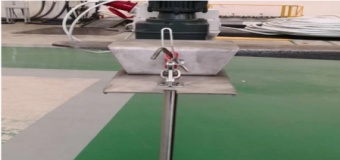
There are several key benefits to using an IBC tote tank mixer in industrial applications. These benefits make them particularly popular in industries where large volumes of liquids or semi-solids need to be processed efficiently and safely.
Space Efficiency: IBC totes are designed to be stackable and easy to transport, making them ideal for bulk storage and shipping. Using an IBC tote tank mixer allows companies to mix large quantities of material within these compact containers, optimizing space in both storage and production areas.
Ease of Use and Portability: IBC totes are portable, and the mixers can be easily moved from one tote to another, making them versatile for various production lines. This portability is especially beneficial for operations that need to switch between different batches or formulations regularly.
Cost-Effective: Using IBC totes with built-in mixing capabilities helps reduce the need for expensive mixing tanks or large-scale equipment. These mixers can be relatively inexpensive compared to larger, more complex mixing systems, especially when scaling up production or for smaller operations.
Consistency and Homogeneity: Achieving consistent product quality is crucial in industrial applications, especially in food production, chemicals, and pharmaceuticals. IBC tote tank mixers help maintain uniformity in the mixture, ensuring that all components are thoroughly blended and preventing batch inconsistencies.
Versatility for Various Materials: IBC tote tank mixers are suitable for mixing a wide range of materials, from liquids and slurries to viscous pastes and powders. This makes them versatile for many industries, including food and beverage, pharmaceuticals, chemicals, and cosmetics.
Reduced Contamination Risk: Since IBC totes are closed containers, the risk of contamination during the mixing process is minimized. The sealed environment helps protect the mixture from external contaminants, which is particularly important in industries such as pharmaceuticals and food production.
Customization: IBC tote tank mixers come in various designs and configurations, allowing for customization based on specific application needs. Whether you need high shear mixing, gentle agitation, or robust circulation, the mixers can be tailored to fit your process requirements.
IBC tote tank mixers are used across a wide range of industries where large volumes of material need to be mixed efficiently. Here are some common applications:
Chemical Manufacturing: In the chemical industry, IBC tote mixers are used to mix various chemical solutions, suspensions, and emulsions. Their ability to handle large quantities and provide efficient mixing makes them ideal for batch processing in chemical production.
Food and Beverage: In food processing, these mixers are used to blend ingredients, create uniform batches of sauces, syrups, or dressings, and emulsify liquids. They help maintain product consistency while adhering to strict hygiene standards.
Pharmaceuticals: IBC tote mixers are crucial in the pharmaceutical industry for mixing active ingredients with excipients to create formulations for tablets, syrups, or creams. They provide controlled mixing, which is vital for ensuring product quality and uniformity.
Cosmetics: In the cosmetic industry, these mixers are used to blend oils, creams, lotions, and other cosmetic ingredients. The ability to achieve consistent texture and smoothness is essential for product appeal and customer satisfaction.
Agriculture and Fertilizer: IBC tote mixers are used to mix agricultural chemicals, pesticides, and fertilizers in bulk. These mixers help ensure that the chemicals are thoroughly blended, improving the efficiency of the application process.
Paint and Coatings: In the production of paints and coatings, IBC tote mixers are employed to ensure that pigments, resins, and solvents are evenly mixed, which is critical for achieving the desired color and consistency.
An IBC tote tank mixer is a valuable tool for industrial mixing, providing an efficient, cost-effective, and versatile solution for mixing a wide variety of materials in IBC totes. Whether you're working with liquids, powders, or pastes, these mixers offer a solution that maximizes productivity while maintaining product consistency and quality.
For industries that require high-volume mixing in a compact, portable form, the IBC tote tank mixer is a reliable and effective choice. The flexibility and ease of use make them a preferred option for companies that need to mix bulk materials efficiently.
If you're looking to learn more about IBC tote tank mixers and how they can enhance your production processes, KeHeng is a leading manufacturer with years of experience in providing mixing solutions for various industries. Their expertise can guide you in selecting the right mixer for your specific needs, ensuring optimal performance and efficiency in your operations.