- All
- Product Name
- Product Keyword
- Product Model
- Product Summary
- Product Description
- Multi Field Search
Please Choose Your Language
Views: 0 Author: Site Editor Publish Time: 2025-12-19 Origin: Site
In the world of industrial mixing, viscosity plays a critical role in determining the performance and efficiency of the mixing process. Whether you are working with liquids, pastes, or slurries, understanding the impact of viscosity on mixing behavior is essential to optimizing production, improving product quality, and reducing operational costs. This article will explore how viscosity affects the performance of industrial mixers, the types of viscosity that are important for mixing, and how different viscosities impact the mixing process.
Viscosity is a measure of a fluid's resistance to flow. It describes how "thick" or "thin" a liquid is, which determines how easily it flows when subjected to external forces, such as stirring or pumping. In simple terms, viscosity is the internal friction between molecules within a fluid that resists its flow.
Low Viscosity: Fluids with low viscosity, like water or alcohol, flow easily and are less resistant to movement.
High Viscosity: Fluids with high viscosity, like honey or motor oil, flow more slowly and are resistant to movement.
Understanding the viscosity of materials being mixed is crucial for choosing the right industrial mixer and optimizing its performance. The level of viscosity influences the type of mixing equipment needed and how effectively the mixing process will occur.
Viscosity plays a significant role in the mixing process and directly influences how well an industrial mixer can blend different materials. When mixing fluids of varying viscosities, the mixer must overcome the internal resistance of the fluid to create a homogeneous mixture. Here’s how viscosity impacts mixing performance:
The viscosity of a material directly impacts the power requirements during the mixing process. As viscosity increases, so does the material’s resistance to flow, which means mixers must exert more force to move the material through the mixing chamber. This increased resistance requires more energy to overcome the friction within the fluid, leading to higher power demands.
Low Viscosity: For liquids with low viscosity, such as water-based solutions or light oils, mixers generally require less power to move the fluid. The low resistance allows the material to flow freely, making it easier for the mixer to create uniform mixtures quickly and with minimal energy expenditure. Common low-viscosity materials include beverages, syrups, or paint.
High Viscosity: Conversely, thick liquids and pastes like creams, oils, slurries, or dough are more resistant to flow due to their high viscosity. As a result, more power is needed to generate sufficient torque to move these materials. High-viscosity materials require specialized mixers equipped with larger motors or more robust designs capable of handling the extra load. These systems are designed to provide additional force to overcome internal resistance and achieve the desired consistency.
In industrial settings, the power requirements for mixing high-viscosity fluids are typically measured in terms of torque and horsepower. The torque determines how much force is applied to the material, while horsepower measures the overall energy needed for the motor to perform the task efficiently.
The speed at which mixing occurs is also influenced by viscosity. As the viscosity increases, the time it takes to achieve a uniform mixture increases as well. High-viscosity materials are more difficult to move, so mixers must be run for longer periods at lower speeds to achieve the same level of homogeneity as with lower viscosity materials.
Low Viscosity: Materials with low viscosity can be mixed quickly and efficiently. The lower resistance allows for faster mixing times, which leads to higher throughput in production processes.
High Viscosity: High-viscosity materials require slower speeds and longer mixing times to ensure that all particles or ingredients are evenly distributed. This results in reduced production speed but improved consistency.
Shear stress is the force that is applied to the fluid by the mixer blades. Higher viscosity fluids resist shear, meaning that more force is required to break apart or move the material. For high-viscosity fluids, it is important to use mixers that can generate sufficient shear stress to break down the material into smaller droplets or particles.
Low Viscosity: Low-viscosity fluids flow more easily under shear stress and do not require as much energy to mix effectively. The shear stress applied by the mixer results in uniform particle distribution with minimal force.
High Viscosity: In high-viscosity fluids, the material's resistance to shear can cause uneven mixing or poor dispersion of solid particles. Specialized mixing equipment with high shear capabilities may be needed to achieve the desired results.
This is why high-viscosity materials often require high shear mixers, which are designed to apply more force to the material to achieve better dispersion and homogeneity.
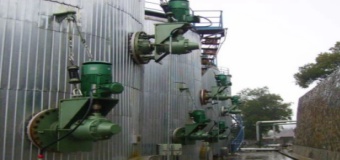
Choosing the right industrial mixer for the job is essential for optimizing performance. The type of mixer used depends on the viscosity of the material being processed. Below are some types of industrial mixers and their suitability for different viscosities:
For materials with low viscosity, such as water-based solutions, beverages, or thin oils, agitators and propeller mixers are typically used. These mixers are designed for high-speed mixing and can efficiently move liquids with low resistance.
Common Mixers: Propeller mixers, turbine mixers, and paddle mixers.
Advantages: These mixers provide high-speed agitation, which is ideal for low-viscosity materials that require fast and efficient mixing.
For materials with medium viscosity, such as paints, inks, and semi-viscous fluids, centrifugal mixers or high shear mixers are often used. These mixers are capable of handling fluids that require moderate shear stress to break down particles and create a homogeneous mixture.
Common Mixers: High shear mixers, ribbon blenders, and agitators with multiple stages.
Advantages: They provide moderate shear and are capable of mixing materials that have moderate resistance to flow.
For high-viscosity materials such as pastes, dough, adhesives, and resins, specialized planetary mixers, sigma blade mixers, and twin-shaft mixers are often required. These mixers are designed to handle thick materials by generating high shear and using low-speed agitation.
Common Mixers: Planetary mixers, sigma blade mixers, and planetary dispersers.
Advantages: These mixers can handle thick, heavy materials by generating enough shear and mechanical action to mix the material thoroughly.
To achieve the best mixing results, it's important to consider the viscosity of the material being processed. Here are a few tips to optimize mixing performance:
Adjusting the mixer speed based on the viscosity can improve the overall efficiency. High-viscosity materials may require slower speeds to avoid overloading the motor or causing damage to the equipment. Conversely, low-viscosity materials can be mixed at higher speeds for faster results.
As discussed earlier, selecting the appropriate mixer type based on the material’s viscosity is crucial. High-viscosity materials require high-shear mixers or planetary mixers, while low-viscosity materials can be efficiently mixed with simple propeller mixers.
Viscosity is highly temperature-dependent. For certain materials, adjusting the temperature can reduce viscosity and make mixing easier. Heating or cooling the material before mixing can improve the process and lead to better results.
High-viscosity materials put more strain on mixers, so it’s essential to regularly check and maintain equipment. Lubricating moving parts, inspecting seals and gaskets, and ensuring that the motor is operating at optimal levels will help maintain mixing efficiency.
Viscosity plays a pivotal role in the performance of industrial mixers. The relationship between viscosity and mixing efficiency is essential to consider in order to choose the correct mixer, adjust processing speeds, and optimize production. Whether dealing with low, medium, or high-viscosity materials, selecting the appropriate mixer type and adjusting parameters accordingly can ensure efficient, effective, and consistent mixing.
At JiangSu KeHeng Petrochemical & Electrical Machinery Co., Ltd, we specialize in providing high-quality industrial mixers designed to handle various viscosities, ensuring optimal mixing performance for all types of materials. Our experienced team is ready to guide you in selecting the best mixer for your application, optimizing production processes, and improving the overall efficiency of your operations.
Viscosity determines how easily a material flows and how much resistance it provides during mixing. Higher viscosity materials require more power, slower speeds, and specialized mixing equipment to achieve a homogeneous blend.
For high-viscosity materials such as pastes and dough, planetary mixers and sigma blade mixers are ideal. These mixers provide the necessary shear and mechanical action to mix thick materials effectively.
Yes, viscosity can be reduced by adjusting the temperature or by using solvents, diluents, or additives, depending on the material being mixed. This can make mixing easier and more efficient.
If you notice poor mixing results, excessive wear on equipment, or excessive power consumption, it may be time to evaluate the viscosity of the material and choose a more appropriate mixer.
Shear stress is essential for breaking down materials and ensuring a homogeneous mix. Materials with higher viscosity require more shear to break them down and achieve the desired texture and consistency.